How to Buy a Car Without Going to the Dealership
May 27, 2026 · By Adam Huber
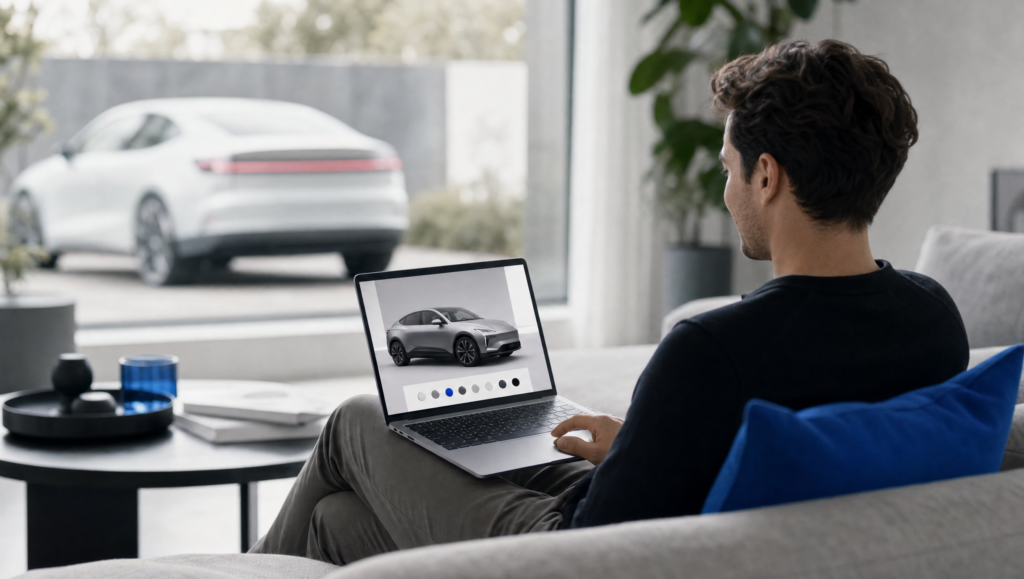
You don’t have to walk into a dealership to buy a car. You don’t have to sit across from a salesman. You don’t have to wait while he disappears to “talk to his manager” for the fourth time. There’s a way to do this where you show up at the very end, sign one set of papers, and drive home.
This post covers the real options for buying a car without setting foot in a showroom. Some work great. Some quietly add hours of phone tag and email back-and-forth that ends up worse than just going in. We’ll get into when each one makes sense and when it doesn’t.
TL;DR
You can buy a car without going to the dealership by using one of five paths: a fully online dealer like Carvana, a direct-to-consumer manufacturer like Tesla, a private-party seller, an auction, or a buyer’s agent who handles the dealership for you. The right choice depends on whether you want maximum convenience, lowest cost, or someone advocating for you during the negotiation.
Why people want to skip the dealership in the first place
Most people don’t hate cars. They hate the buying process.
The average new-car purchase takes around four hours at the dealership. That’s not counting the drive there, the second visit because financing fell through, or the day you already spent researching online. The F&I office alone, where they pitch you extended warranties, paint protection, and gap insurance, usually runs 45 to 90 minutes by itself.
If you’ve ever bought a car, you know the rhythm. The salesman asks what payment you’re comfortable with. He goes to talk to his manager. He comes back. He goes again. The whole structure of the visit is designed to keep you in the building long enough to wear down whatever number you walked in with.
The pain points people quote most often:
- The time. Most buyers lose a full Saturday to it.
- The pressure. Trained salespeople versus regular humans who buy a car every four to seven years.
- The F&I gauntlet. Aggressive upsell after you thought the deal was done.
- The manager theater. “Let me check with my manager” repeated until something gives.
- The trade-in negotiation, which is a separate fight on top of the car negotiation.
People aren’t trying to avoid buying a car. They’re trying to avoid that experience.
The five real ways to buy without going in
1. Fully online dealers (Carvana, Vroom, CarMax online)
How it works: you browse inventory online, click buy, arrange financing through their portal, and they deliver the car to your driveway. Most have a seven-day return window.
Good for: convenience. You really can do the whole thing in your pajamas.
Not good for: selection at the trim or color level. You’re picking from their inventory only. Pricing is no-haggle, which means the number is what it is. Whether that number is fair varies a lot.
2. Manufacturer direct (Tesla, Rivian, Lucid)
How it works: order through the manufacturer’s website. Pick options. Pay a deposit. Wait for the build. Take delivery at a service center or your home.
Good for: a frictionless buying experience for one specific brand. No salesperson. No F&I office. No negotiation because there’s nothing to negotiate.
Not good for: anything that isn’t a Tesla, Rivian, Lucid, or one of the handful of other direct-sale brands. If you want a Mercedes, a Toyota, or a Ford, you’re still going through a dealership somewhere.
3. Private party
How it works: find a car on Facebook Marketplace, Craigslist, Bring a Trailer, or AutoTrader’s private listings. Meet the seller. Inspect the car. Pay cash or a cashier’s check. Handle the title transfer at the DMV.
Good for: pricing. Private-party prices are usually a few thousand below retail dealer pricing on the same car. You also dodge most of the dealer markup.
Not good for: financing (most banks won’t finance private-party deals as cleanly), warranty (you’re getting whatever’s left of the original), inspection (you’re paying for it yourself), and the time cost of finding the right car in a sea of noise.
4. Auctions (online or in-person)
How it works: bid through Manheim (dealer auction, restricted access), Copart (salvage), or consumer-facing auctions like Bring a Trailer.
Good for: enthusiast cars, off-lease commercial vehicles, and specific niche buys. Bring a Trailer has built a real market for clean used examples.
Not good for: most people buying a daily driver. The risk profile is wrong, the inspection burden falls on you, and the title situations can get messy.
5. A buyer’s agent or car concierge service
How it works: you tell someone exactly what you want. They find it, negotiate the price, and prep the paperwork. You show up at the dealership at the very end, sign the papers, and drive home. The middle eighty percent of the work happens without you.
Good for: getting the exact car you want, from any dealer inventory in the country, without spending a single weekend on it. You still go to a dealership briefly to sign, but you skip the negotiation, the F&I pitch, and the multi-hour back-and-forth.
Not good for: people who genuinely enjoy the hunt. If you like the process, you don’t need a car buying service. Most people don’t like the process.
When a buyer’s agent makes sense (and when it doesn’t)
A buyer’s agent makes sense if any of these are true for you:
- You’re working full time, raising kids, running a business, or some combination, and you can’t afford to lose a Saturday.
- You hate the dealership process specifically. The pressure. The pitching. The manager theater.
- You want a car that isn’t on the local lot. Sourcing one yourself means cold-calling dealerships in other states.
- You want someone on your side of the table during the negotiation, not the dealer’s side.
- You’re buying a car out of state and you can’t visit the lot to test drive.
It doesn’t make sense if:
- You actually enjoy negotiating and visiting lots.
- You’re buying a sub-$10K car where the fee changes the math.
- You already have a relationship with a salesperson who runs a low-pressure desk and you trust them.
For most busy people, the math works because the value isn’t the price. It’s the time and the relief.
What the process looks like with a concierge
The walk-through is roughly the same across most buyer’s agent services.
- Intake. You fill out a form with the spec. Make, model, trim, color preferences, mileage cap, budget ceiling, trade situation, financing plan, timeline. 2. Sourcing. The agent searches inventory across their network and the broader market. You get a short list of one to three cars with stock numbers and a “why this one” note. 3. Negotiation. The agent negotiates with the holding dealership. You see the locked deal sheet before signing off. 4. Signing. You go to the dealer, sign the paperwork that was already negotiated, and drive home. No back-and-forth. No F&I gauntlet, because the F&I product list was addressed in the pre-negotiation. 5. Followup. A good service checks in at seven and thirty days.
You’re still going to the dealership at the end. Most states require the signing to happen at the holding dealer’s location. What you’re skipping is the four hours of negotiation and the F&I office in the middle. If you want a deeper side-by-side, here’s concierge car buying vs doing it yourself.
What it costs
A buyer’s agent service typically charges a flat fee paid upfront. At Just Sign Cars, that fee is $750, paid upfront, non-refundable. It covers the project, not a specific car. If the first deal falls through, we keep working until you sign on one.
That fee isn’t a price discount. We don’t promise we’ll beat what you could negotiate yourself on any given car. What you’re paying for is your time and your nervous system. You don’t sit in the showroom. You don’t get worked. You walk in at the end, sign, and drive.
For a lot of people, that math is obvious. A Saturday is worth more than $750. So is not having to drag the kids to a dealership and entertain them in the waiting room while the F&I office sells you tire-and-wheel coverage.
FAQs
Can you really buy a car without ever going to a dealership?
Not all the way. For most franchise-brand purchases, the signing has to happen at the holding dealer because of state title and registration laws. What you can skip is the negotiation, the sales floor, the test-drive ride-alongs, and the F&I office. With a buyer’s agent, your time at the dealer is usually under 45 minutes, just to sign and drive.
Is it cheaper to skip the dealership?
Sometimes, but that’s not the right question. The price you pay for a car depends on the deal, not the channel. Private-party is usually the cheapest path. Manufacturer-direct is fixed at sticker. Buyer’s agents charge a fee on top of the negotiated price. The honest answer is that skipping the dealership saves you time and stress, not necessarily money.
Do I have to test drive before buying?
You don’t have to. Most people do, because it’s the only way to know if the seats fit your back and the visibility works for you. If you’re buying the same model you already own, or a refresh of one you’ve owned, plenty of people skip the test drive. Some agents arrange a test drive at the dealership before the signing, separate from the buying process itself.
What about financing if I don’t go in person?
Financing is almost always faster outside the dealership. Get pre-approved through your credit union or bank before you start. You’ll know exactly what you can borrow, at what rate, before you ever pick a car. Most buyer’s agents prefer it this way because it removes the F&I office’s biggest lever.
Can I do this out of state?
Yes. Out-of-state purchases are one of the strongest cases for a buyer’s agent. You don’t have to fly out to negotiate. The agent handles the dealership remotely. You either fly in for the signing or arrange transport home.
How long does it actually take?
From intake to driving home: usually two to four weeks if you have a flexible spec, longer if you want a specific color in a specific trim. Your active time on the project is the intake (30 minutes), spec confirmation (one short call), and the signing visit (under an hour). The rest happens without you.
Bottom line
Skipping the dealership is more about skipping the experience than skipping the building. Pick the path that matches what you actually want. If your goal is the lowest possible price and you enjoy the chase, go private party. If you want a frictionless brand experience, look at direct-sale manufacturers. If you want a normal new or used car from a normal dealer without the four-hour Saturday, hire someone to handle it.
Just Sign Cars is built for the last case. We find the car. We negotiate. You walk in, sign, and drive.
We do the dealership part. You do the driving part.